
Pharmaceutical & healthcare advisory · Vietnam
Vietnam is one of the fastest-growing economies in the world today. And one of the most opaque.
The healthcare market is extremely fluid
The regulatory environment is constantly evolving.
Local competitors learn fast and adapt quickly.
Local talent is increasingly professional.
Nobody does business in Vietnam the way they did five years ago.
USD billion · local production vs imported
Sources: Ministry of Health / Drug Administration of Vietnam (DAV) figures, as reported for 1996, 2009, 2011, 2018–2021 and 2025. Only years with a published total and local/imported split are shown; no reliable series exists before 1996. Imported vs local production is a proxy for foreign vs local players.
Millions of households living on more than USD 15 a day per person
Source: World Bank Poverty & Inequality Platform, share of the population above USD 15 a day (2017 PPP), household surveys 1992–2022; converted to households using census household sizes (GSO: 4.5 in 1999, 3.8 in 2009, 3.5 in 2019). The jump in 2010 reflects a change in survey methodology. 2035: World Bank projection of over half the population (Vietnam 2035 report).
How can we help your operation?
| Your situation | What we bring |
|---|---|
| You are entering Vietnam and every advisor tells you something different. | An entry model and a partner choice grounded in how the market really works, and a realistic sequence for the first years. |
| Sales have plateaued despite a strong portfolio. | A diagnosis of the operation, then clear priorities on portfolio, channels and commercial organisation. |
| Your distributor has become a black box. | A reading of the distributor's real economics and incentives, and options to renegotiate, restructure or change partner. |
| You need a field force, in-house or outsourced. | Sizing and structure of the medical sales force, from design to setup. |
| Group compliance rules do not fit how the market operates. | Practices that respect the group's standards and still work in the Vietnamese context. |
| You are assessing a local company to acquire or partner with. | An operational and commercial review that shows what lies behind the numbers. |
| A new country manager is taking over. | A sounding board from day one, so that relationships and lessons are not lost in the handover. |
Case studies
Case 1 · Vaccines2023–2024
Taking over a USD 20 million+ portfolio
A newly created Geneva-based pharmaceutical company acquired a product from a global pharmaceutical group. In Vietnam, the product already generated more than USD 20 million in annual sales. Management asked us what it would take to run the portfolio locally: which legal structure, which distributor, and which promotional set-up.
Approach
We helped define the legal structure, advised on the choice of law firm, assisted in the selection of the distribution partner and helped design the promotional model. We then supported the company on the ground for a year, until its permanent local team was recruited and in place.
Outcome
The portfolio was transferred successfully and sales continued to grow. The company is now launching a second product in Vietnam.
Case 2 · Pharmaceuticals2020s
A local distributor with four sets of books
A North American pharmaceutical company commissioned an operational audit of its Vietnam business: local management, human resources, marketing strategy and distribution.
A local distributor with four sets of books
A North American pharmaceutical company commissioned an operational audit of its Vietnam business: local management, human resources, marketing strategy and distribution.
Approach
Alongside the review of the local organisation, one of our cost controllers spent time on site with the company's distributor. He found that the distributor kept four different sets of accounts: one for its shareholders, one for the local authorities, one for its principals, and one for itself.
Outcome
With this information, the client was equipped to make management changes, reorganise its operations and move forward with revised objectives.
Case 3 · Pain management1990s
The UPSA Pain Institute: from selling a molecule to treating pain
UPSA generated most of its revenue from paracetamol. Rather than continuing to promote the molecule itself, the company chose to position itself on a broader therapeutic need: the treatment of pain.
The UPSA Pain Institute: from selling a molecule to treating pain
UPSA generated most of its revenue from paracetamol. Rather than continuing to promote the molecule itself, the company chose to position itself on a broader therapeutic need: the treatment of pain.
Approach
In partnership with Vietnam's health authorities, UPSA opened two pain treatment centres, one in Hanoi and one in Ho Chi Minh City. Building on these centres, it developed a medical communication strategy with key opinion leaders across specialties: paediatric pain, cancer pain, orthopaedic pain, post-operative pain and more.
Outcome
The strategy firmly established the brand within the Vietnamese medical community and grew prescriptions of the company's products. Above all, it built a solid, long-term partnership with the country's health authorities.
Case 4 · Pharmaceuticals2010s
A new general manager discovers the market
A US multinational pharmaceutical group decided to reopen its representative office in Vietnam, which it had closed some years earlier. It appointed a Western general manager who had no previous experience of general management, nor of Vietnam.
A new general manager discovers the market
A US multinational pharmaceutical group decided to reopen its representative office in Vietnam, which it had closed some years earlier. It appointed a Western general manager who had no previous experience of general management, nor of Vietnam.
Approach
Commissioned by regional management, we handled his orientation and onboarding, and helped him set up the representative office, recruit his first teams and define marketing strategies in an environment we knew well. A one-year coaching programme followed, with weekly meetings to work through the difficulties of the week and find practical solutions: a tension with a finance director appointed by the region, the choice of a company car, the assessment of senior candidates, some of whom we knew personally.
Outcome
The representative office was set up and staffed, and the general manager had an experienced local sounding board throughout his first year in the role.
Our resources
Having led organisations of several hundred people, and run our own firm with a team of fifteen, we have chosen a lighter, more flexible model. For each mission, we assemble a team of senior freelance experts from a network built over thirty years, around the skills the mission requires, supported by modern digital tools. The result is more cost-effective and more efficient for our clients: you pay for the expertise you need, not for a structure.
A senior lead on every mission
Each mission is led personally by our founder, Vincent Goalard, from the first meeting to the final recommendations.
Experts selected for each mission
For every mission, we bring in freelance experts from a network built over thirty years, chosen for the skills the mission requires.
Modern working tools
Digital and AI-assisted research, video conferencing and remote collaboration let us work fast, wherever the mission requires. AI is used under strict rules: client information stays confidential, and every analysis is reviewed and signed off by a senior consultant.
Why us?
In Asia, trust is not given. It is built, over time.
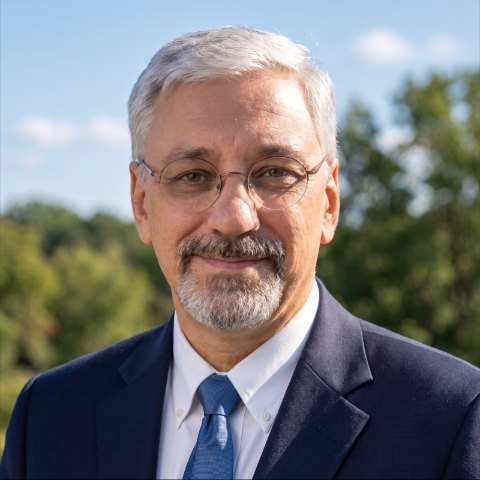
Three decades in Vietnam have allowed me to build relationships of trust with leading figures of the medical and healthcare community, and with the authorities, some of them going back to the early 1990s.
I have also had a front-row seat to successive generations of country managers: international and local, aggressive and conservative, pioneers and rule-keepers; American and European, then Indian, and now Asian and Vietnamese. Each brought a very different operational approach.
I have worked on both sides of the market. At Zuellig Pharma, I learned to run a business on a net operating profit below 1%, a discipline that is rare in the pharmaceutical industry and a level of detail at which international laboratories seldom work. Inside a Vietnamese group, I saw local management from within, including family governance, far removed from international practice.
This experience lets me adapt to very different situations, and understand how they came about in twenty-first-century Vietnam.
Vincent Goalard